
The Populist Revolt: Why Working Americans Are Fighting Back
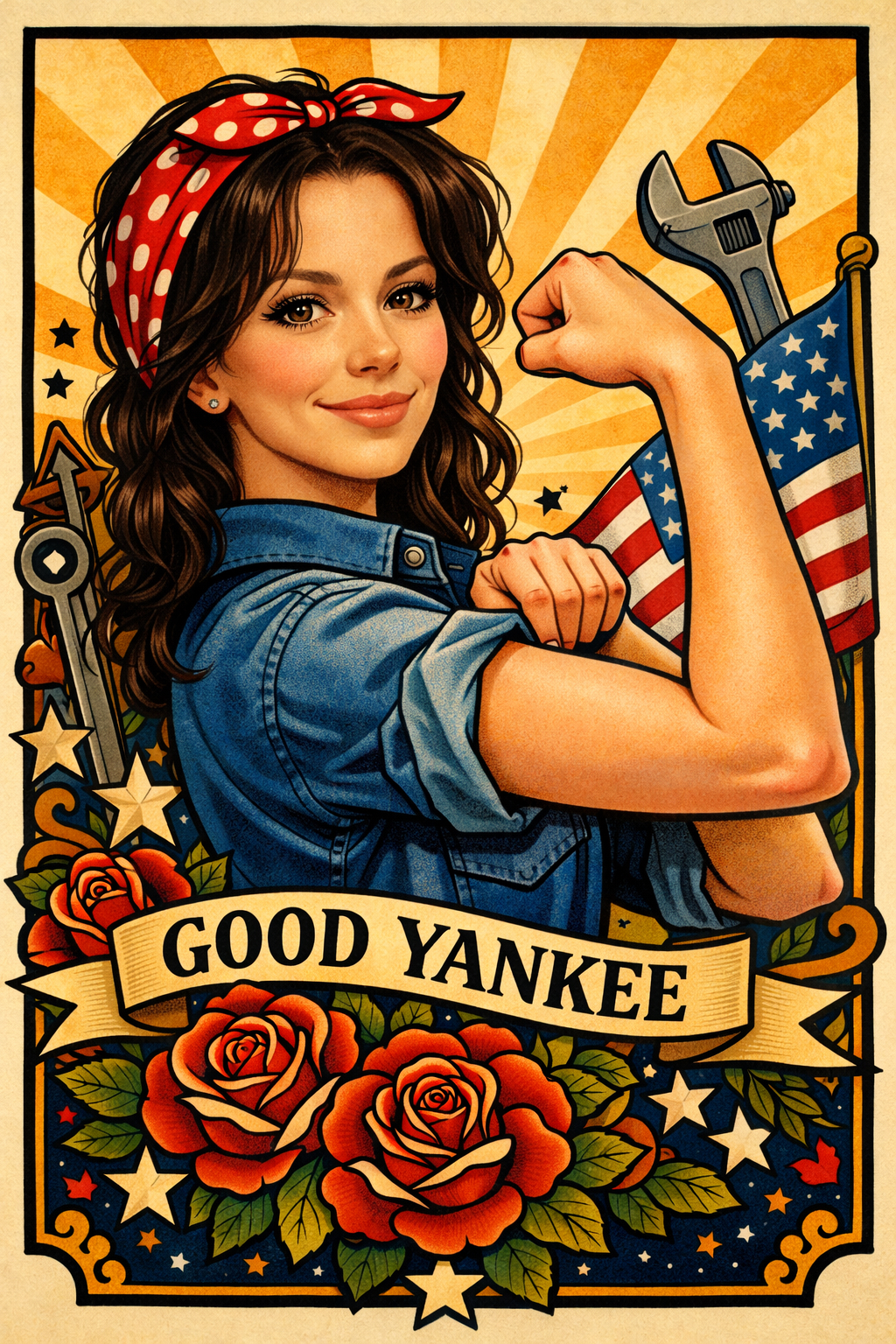
What is American Populism, and why is there such a large divide inside the conservative movement today? Why are so many younger conservatives, working-class Americans, independents, former Democrats, and even people who never cared about politics suddenly finding themselves united under a banner that seems completely different from the Bush controlled Republican party we grew up knowing? We saw with Donald Trump's second election that there was a direct mandate from the American people.
Whether you love him or hate him, the results were impossible to ignore. The Silent Majority, the forgotten American, the working class, and the people who have spent years feeling ignored by both political parties demanded something different. They demanded a populist shift. The funny thing about populism is that most of the people criticizing it don't seem to understand what it actually is. The word itself has become a weapon. If you question the system, you're called a socialist. If you question corporations, you're called a communist. If you question politicians, you're called a conspiracy theorist. If you question endless development, globalization, or foreign wars, you're told you're uninformed or selfish.
The reality is that populism is none of those things. At its core, populism is a political philosophy that focuses on a divide between two groups: ordinary citizens and powerful elites. The central question isn't how much government should exist. The central question is who the government serves. A populist can support government action when it benefits working families, small businesses, and local communities. A populist can oppose government action when it benefits lobbyists, monopolies, multinational corporations, political dynasties, or wealthy insiders who seem to operate under a completely different set of rules than the rest of us. Populism isn't about creating more government or less government. It is about restoring accountability and making sure the institutions that exist actually work for the people who pay for them.
This is where people often confuse populism with socialism or communism. Socialism focuses on economic ownership and generally argues that government should have significant control over industries and wealth distribution. Communism goes even further and advocates collective ownership of productive resources. Populism is different because it isn't primarily an economic ideology. A populist can support capitalism, private property, entrepreneurship, and free markets while simultaneously believing that powerful institutions have rigged the game in favor of the wealthy and politically connected. The conflict isn't workers versus owners. The conflict is the people versus the elite.
That's an important distinction because many of the Americans embracing populism today are not asking for handouts. They're asking for a fair shot.
The truth is that populism is nothing new. In fact, it may be one of the most American political traditions we have. Throughout our history, populist movements have emerged whenever ordinary citizens felt disconnected from the people making decisions on their behalf. Andrew Jackson built his movement around opposition to financial elites and centralized banking power. William Jennings Bryan challenged Wall Street and eastern financial interests on behalf of struggling farmers. Theodore Roosevelt went after monopolies and corporate trusts that had accumulated enormous power. Franklin Roosevelt framed much of his presidency around the idea that government should serve ordinary Americans rather than powerful financial interests. While these men differed dramatically in their policies and politics, they all recognized the same fundamental problem: when too much power becomes concentrated in too few hands, eventually the people push back. That pushback is exactly what we're witnessing today.
For decades Americans were sold a vision of the future that never quite arrived. We were told globalization would make everyone wealthier. We were told free trade would lift all boats. We were told endless development was always a good thing. We were told that if we worked hard, got an education, followed the rules, and stayed out of trouble, success would eventually come. Instead, many Americans watched factories close, neighborhoods change overnight, housing prices explode, wages stagnate, and communities that had existed for generations slowly disappear. We watched corporations grow larger while local businesses disappeared. We watched politicians become wealthier while average citizens became more dependent on debt. We watched entire industries move overseas while being told this was somehow progress.
Then something interesting happened. The internet gave ordinary people access to information that previously would have been filtered through institutions. Americans started comparing notes. They started noticing that the people making the rules rarely had to live under them. They noticed that corporations could receive bailouts while families lost homes. They noticed that lobbyists seemed to have more influence than voters. They noticed that every problem somehow required ordinary Americans to sacrifice a little more while the people at the top continued doing just fine. For many Americans, Trump didn't create this realization. He simply exposed it. Whether people agree with him or not, Trump gave voice to frustrations that had been building for decades. He forced conversations about globalization, immigration, foreign intervention, trade policy, media influence, and the relationship between government and corporate power that many Americans felt were long overdue. He opened the door to a broader populist conversation that extends far beyond any single politician ( The irony of this second Trump term and his complete 180 is not lost on me, but that is a longer discussion for another blog post).
This is where I think many people misunderstand what I mean when I talk about rejecting the "Boomer System." I'm not talking about your parents. I'm not talking about your grandparents. I'm certainly not talking about every Baby Boomer as an individual. My mother worked hard. Many of your parents worked hard. Many people from that generation sacrificed tremendously for their children and communities. The Boomer System is something different. It's the economic and political structure that evolved over the last several decades and increasingly prioritized asset appreciation over affordability, financial speculation over production, corporate growth over community stability, and shareholder value over family formation. It's a system where housing became an investment vehicle instead of a place to raise children. It's a system where young people are expected to take on massive debt for education, then spend decades paying it back while being lectured about personal responsibility. It's a system where two-income households became a necessity rather than a choice. It's a system where retirement feels increasingly unattainable, where childcare costs rival mortgage payments, and where many young families feel like they're running faster every year just to stay in the same place. And perhaps most frustrating of all, when people point out these realities, they're often met with the same dismissive responses. Work harder. Stop complaining. Get another job. Stop buying coffee. Stop buying Dr. Pepper. Stop eating avocado toast. Stop expecting so much. Meanwhile, the cost of housing, healthcare, childcare, and education continues climbing while ordinary Americans are expected to simply absorb the impact.
The result has been a growing realization that this isn't merely an individual problem. It isn't a failure of character. It isn't because an entire generation suddenly became lazy. Increasingly, Americans are recognizing that many of the struggles they face are structural. The system itself has become disconnected from the people it is supposed to serve. That realization is fueling the modern populist movement. At its heart, American populism is not about envy. It is not about punishing success. It is not about socialism, communism, or government control. It is about restoring balance. It is about restoring accountability. It is about creating a country where working hard once again produces meaningful results, where families can afford homes, where local communities have a voice in their future, where government serves citizens instead of donors, and where the American Dream is something more than a nostalgic story older generations tell their children.
The establishment wants Americans to believe that nothing can change. That this is simply the way things are. That we should lower our expectations and be grateful for whatever scraps fall from the table. American populism rejects that idea entirely. It says that government should answer to the people. It says that communities matter. It says that ordinary Americans deserve representation. It says that the wealthiest and most powerful institutions in society should not be immune from criticism. Most importantly, it says that the American Dream is still worth fighting for. And judging by the political realignment we're witnessing across the country, millions of Americans agree.


Comments